Week 2

Introduction to the Grammar of Graphics

Learning Goals

  • Understand different types of variables and how they influence chart selection.
  • Understand how different purposes or analytical tasks influence chart selection
  • Understand the theoretical framework of the Grammar of Graphics
  • Break down key components of a graphic: data, aesthetics, geoms, stats, scales, facets, themes
  • Learn how ggplot2 implements this grammar in practice

Discussion

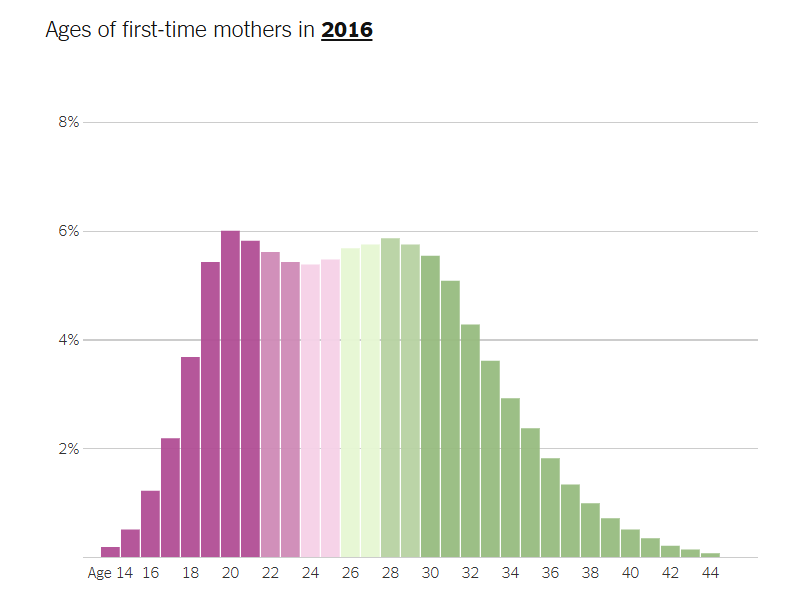
Reading: The Age That Women Have Babies

Get into groups of 2-3 people and discuss the following questions:
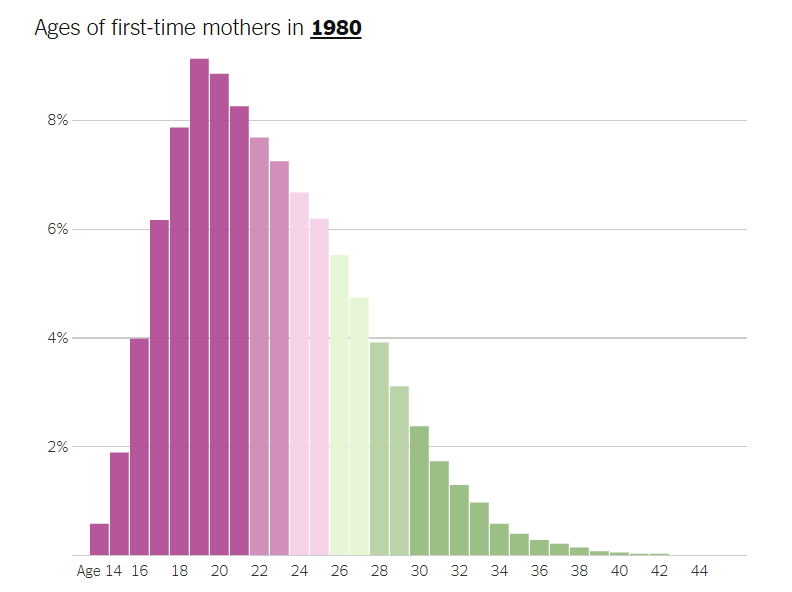
  1. What is something you like about the way this data is portrayed?
  2. What is something you would change in these visualizations?
  3. What data does the percentages on the vertical axis represent?

Classification of Variables

A variable is a data item that can vary or change, and it can take on different values.

There are two types of scales a variable could be:

  • Categorical Variable

  • Quantitative Variable

Categorical

Type of variable that represents categories or groups. It takes one of a limited, usually fixed, number of possible values, assigning each unit of observation to a particular group or nominal category on the basis of some qualitative property.

Examples:

  • Binary: Only takes two possible values, and are typically represented as 1 or 0.

  • Nominal: Categories have no clear order, and are mutually exclusive

  • Ordinal: Have a clear ordering of the categories

Quantitative

Numerical data point (AKA numerical variable) that can be measured or counted, allowing for mathematical operations to be applied.

Examples:

  • Discrete: Can take any countable value represented as an integer (whole number),

  • Continuous: Can take any measurable value within a given range, including fractions and decimals.

Chart Selection

While the grammar of graphics is an excellent tool that lets us specify and construct a visual display of data, it does not tell us what graphic to use.

Right Graph for the Right Analytical Task

Stephen Few: analytical tasks or analytical patterns
Purpose Example Chart Types
Change over time Timeline (line chart), area chart, slope chart
Showing part-to-whole Stacked bar, donut chart, treemap
Comparisons Bar chart , column chart, dot plot
Distributions (quantitative variable) Histogram, boxplot, violin plot, density
Ranking Bar chart (sorted), lollipop chart
Relationships Scatter plot, bubble chart, connected scatter
Correlations Scatter plot, matrix chart
Geospatial Choropleth, symbol map
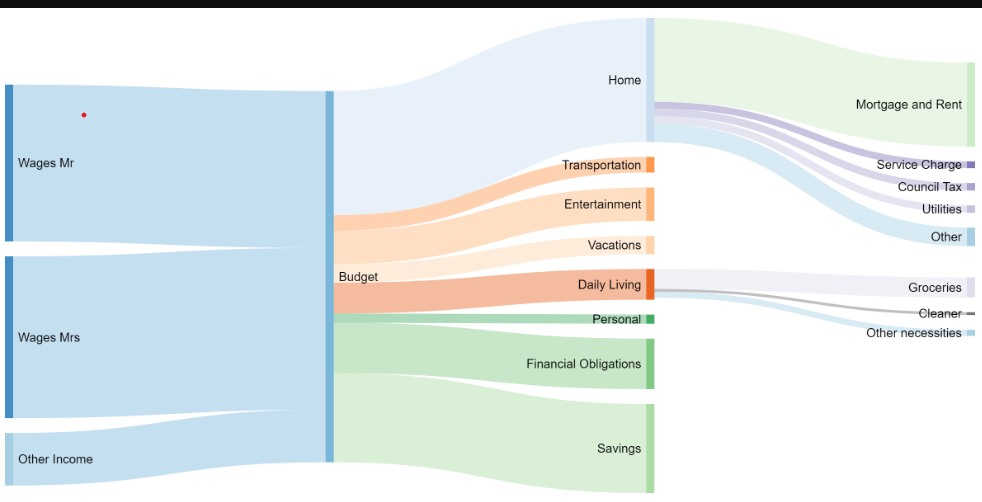
Flow Arrow charts, Sankey diagram
Text Word cloud

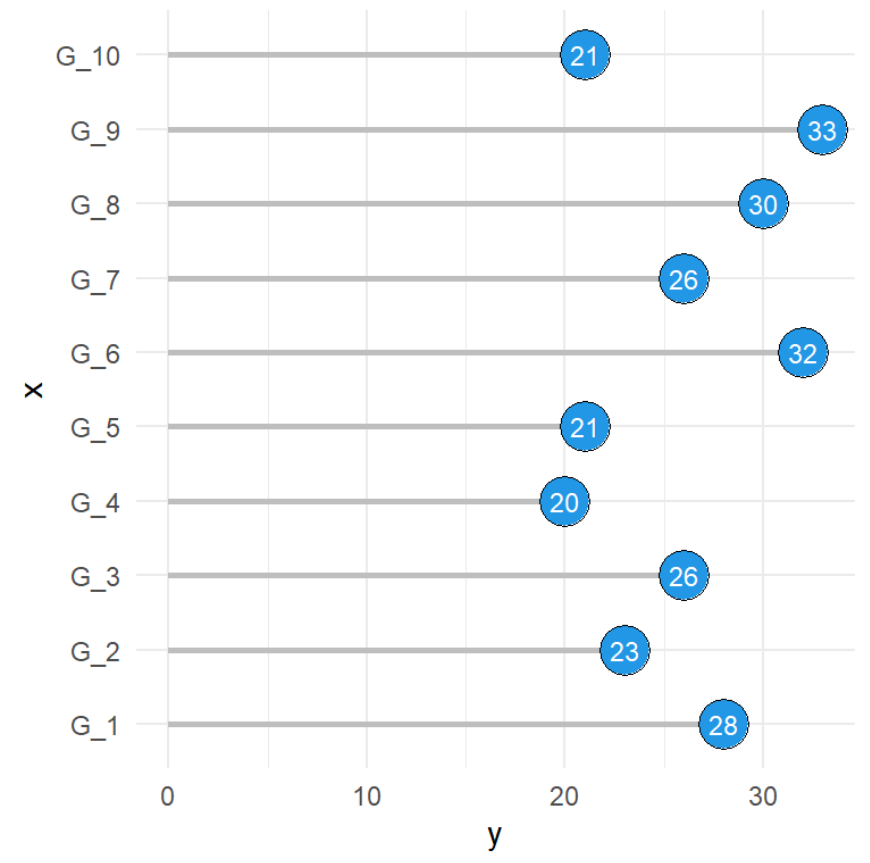
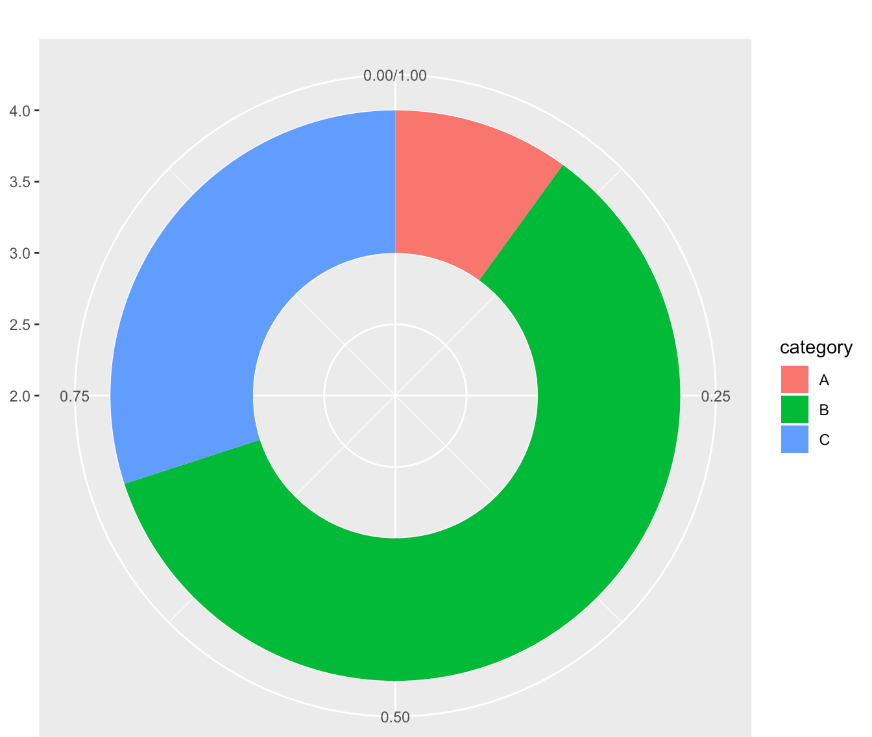
Activity 1: Variables and Graphs

For each graph, identify the type of variables used (i.e. quantitative or categorical), and the analytical task that can be done with such graph.

Lollipop Chart

Sorted Bar Chart

Donut Chart
Sankey Diagram
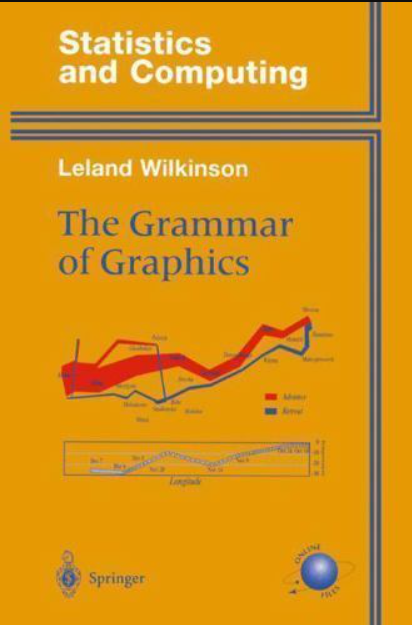
The Grammar of Graphics

“The Grammar of Graphics”

From a conceptual perspective, making graphics involves mapping data to geometric objects and their visual properties.

Why do we need Grammar of Graphics (GG)?

We believe that the GG is a good starting point that gives us a framework (mental map) and a vocabulary to create graphics.

This grammar allows creation of graphics to be:

  • consistent

  • reusable

  • modular

Formalized by Leland Wilkinson (1999)

  • A formal set of rules to create any type of graphics
  • Underlies most modern data visualization software.
  • Implemented as an R package (‘ggplot2’)
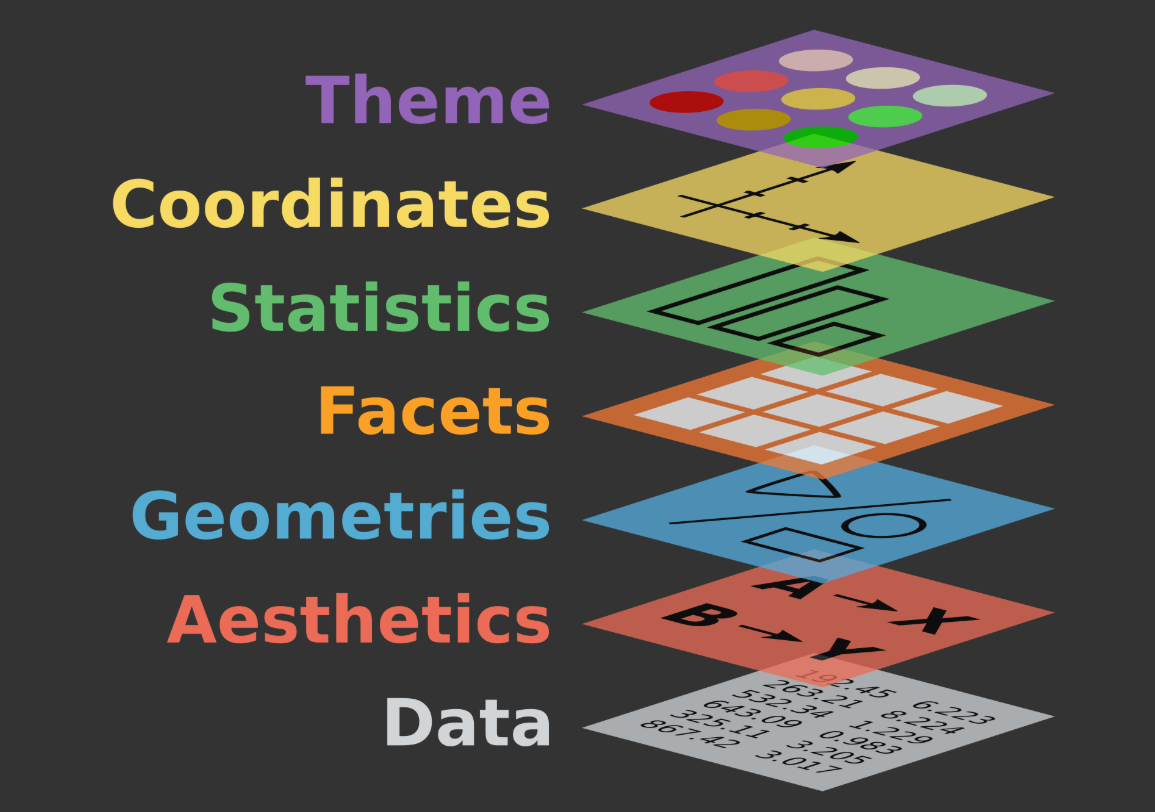
Key Concepts

  • Data: the data set being visualized (next week!)
  • Aesthetics (aes): how variables map to visual properties (x, y, color, size, etc)
  • Geometric objects (geoms): what kind of marks to draw (points, bars, lines)
  • Facets: creating small multiples by splitting data into panels
  • Stats: statistical transformations (e.g. binning for histograms, smoothing lines)
  • Coordinates: how data values are translated into visual values (e.g. color gradients)
  • Themes: controlling non-data elements (fonts, backgrounds, gridlines)
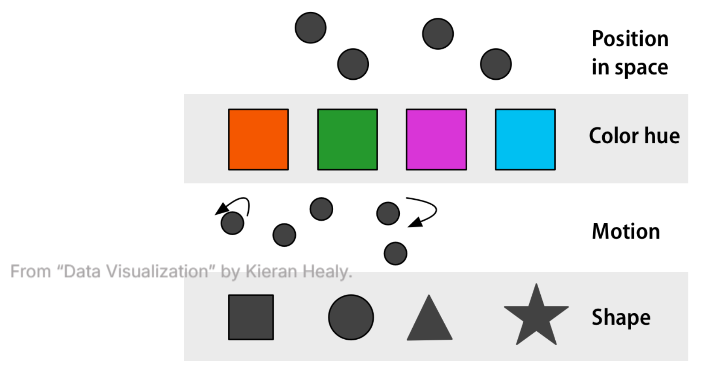
Aesthetic Mapping

An aesthetic mapping links a variable in the data to a visual channel that can encode its variation.

Channels for ordered variables
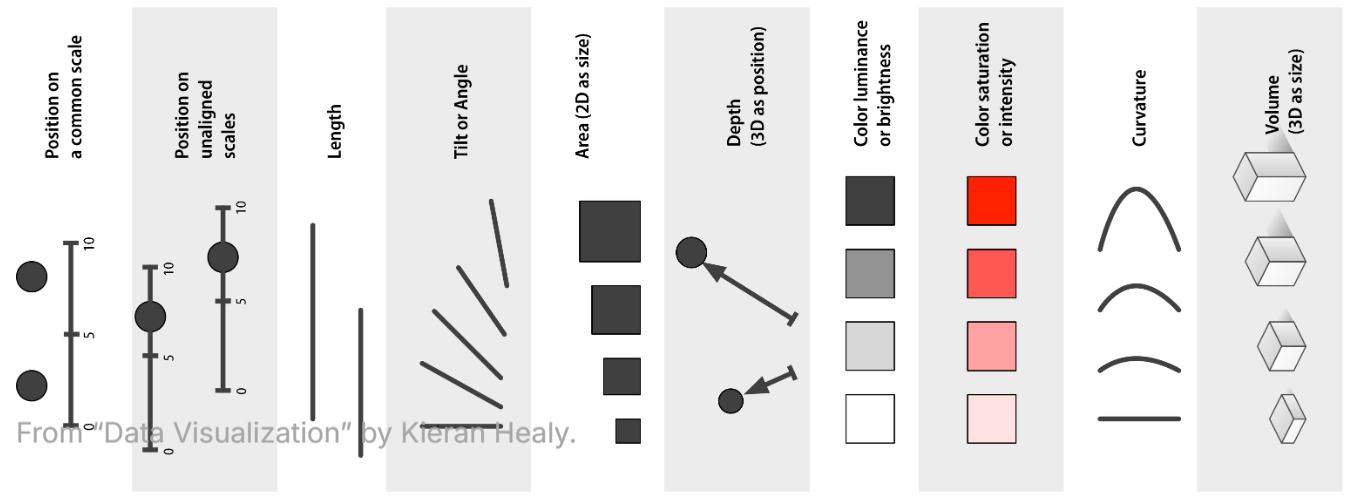
Channels for unordered variables
Geometry

The geometry describes how to translate the observations into marks on the page.

Examples

  • Point
  • Line
  • Bar

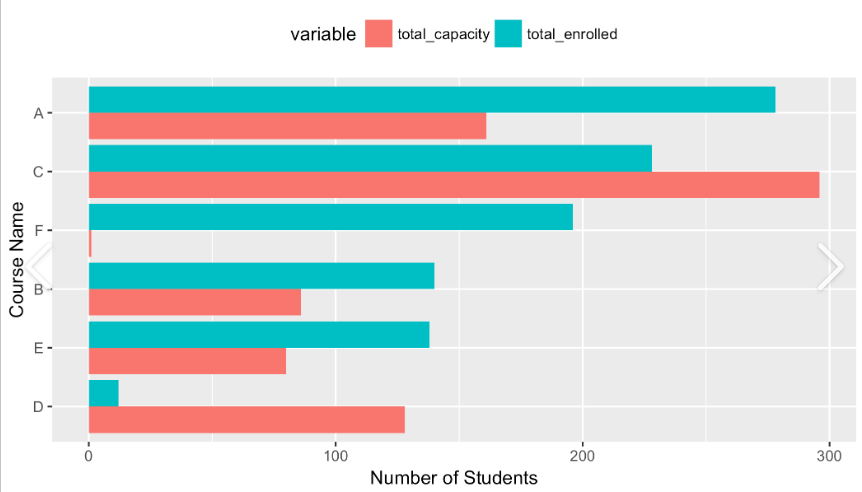
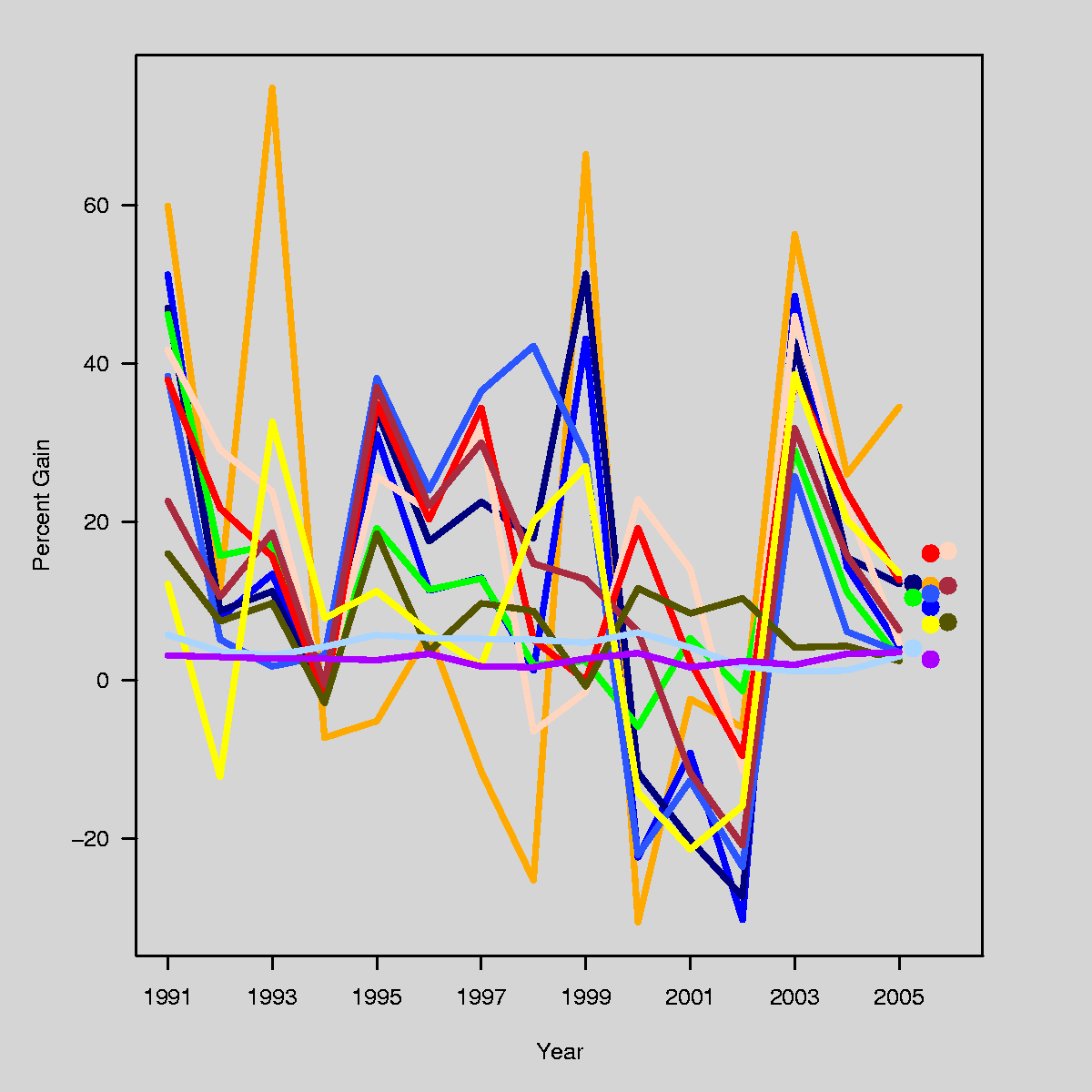
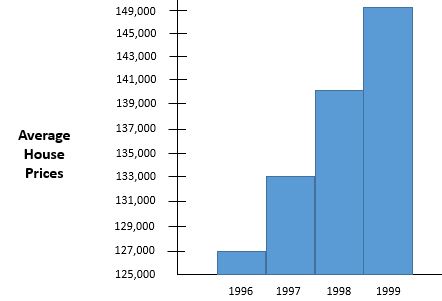
Activity 2: Incorrect or Correct use of GG

Explain why the following graphs do not implement grammar of graphics correctly.

ggplot2

ggplot2()

A plot can be decomposed into three primary elements:

  1. the data,
  2. the aesthetic mapping of the variables in the data to visual channels, and
  3. the geometry used to translate the observations into marks on the plot.

Code Example

Here’s an example of code and output using ggplot2 in R.
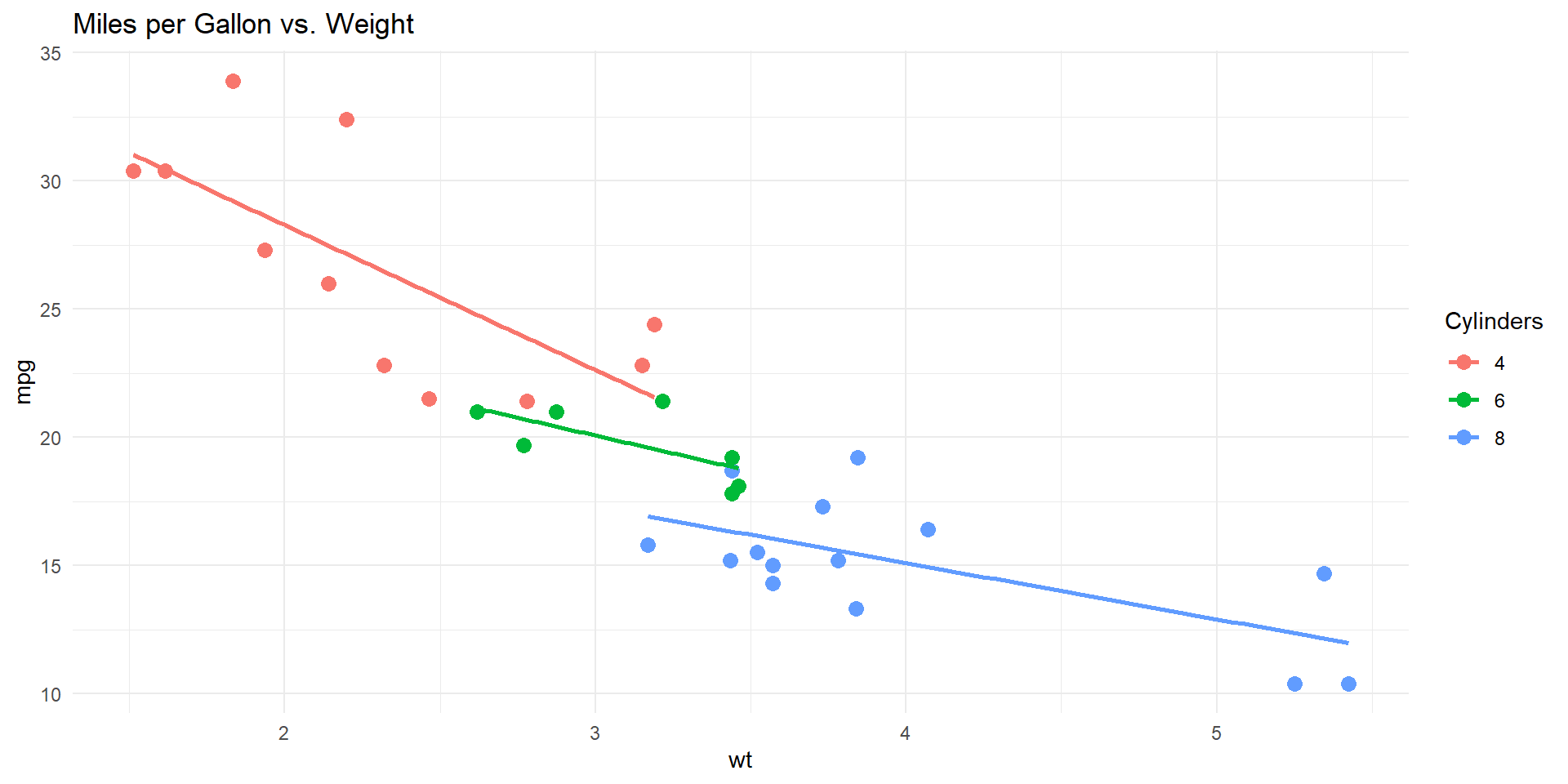
library(ggplot2)

ggplot(mtcars, aes(x = wt, y = mpg, color = factor(cyl))) +
  geom_point(size = 3) +
  geom_smooth(method = "lm", se = FALSE) +
  theme_minimal() +
  labs(
    title = "Miles per Gallon vs. Weight",
    color = "Cylinders"
  )

Meet the Palmer Penguins

library(palmerpenguins)
penguins
# A tibble: 344 × 8
   species island    bill_length_mm bill_depth_mm flipper_length_mm body_mass_g
   <fct>   <fct>              <dbl>         <dbl>             <int>       <int>
 1 Adelie  Torgersen           39.1          18.7               181        3750
 2 Adelie  Torgersen           39.5          17.4               186        3800
 3 Adelie  Torgersen           40.3          18                 195        3250
 4 Adelie  Torgersen           NA            NA                  NA          NA
 5 Adelie  Torgersen           36.7          19.3               193        3450
 6 Adelie  Torgersen           39.3          20.6               190        3650
 7 Adelie  Torgersen           38.9          17.8               181        3625
 8 Adelie  Torgersen           39.2          19.6               195        4675
 9 Adelie  Torgersen           34.1          18.1               193        3475
10 Adelie  Torgersen           42            20.2               190        4250
# ℹ 334 more rows
# ℹ 2 more variables: sex <fct>, year <int>

Question: In terms of the way they are constructed…
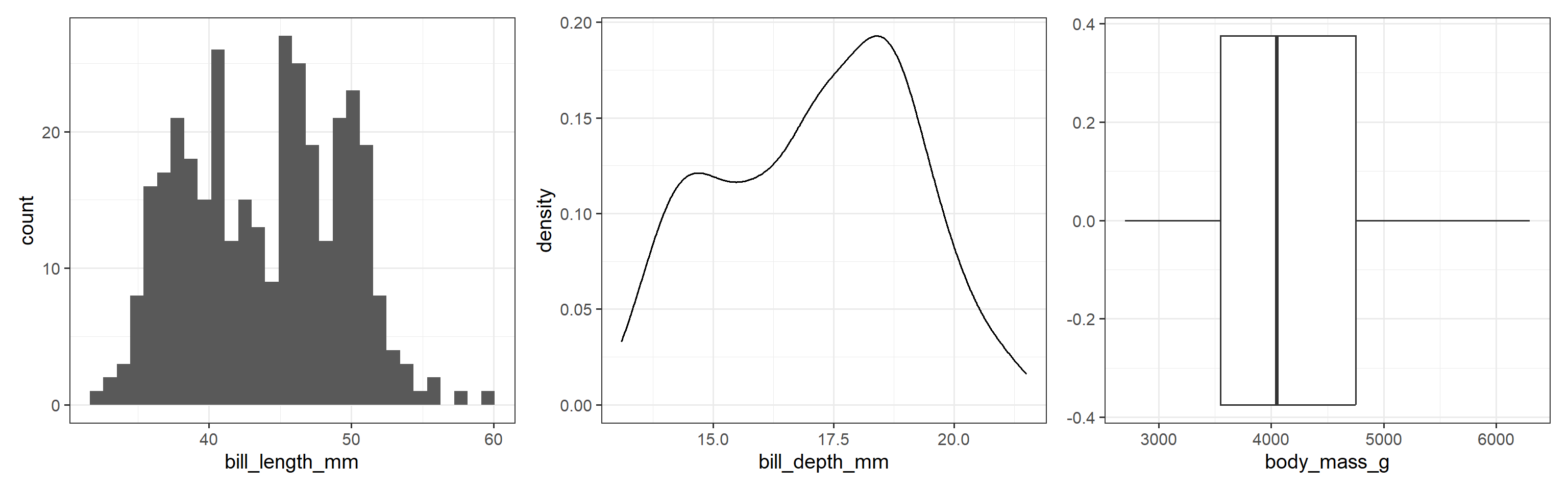
What do these plots have in common? How do they differ?

01:20

Question: What do these plots have in common? How do they differ?
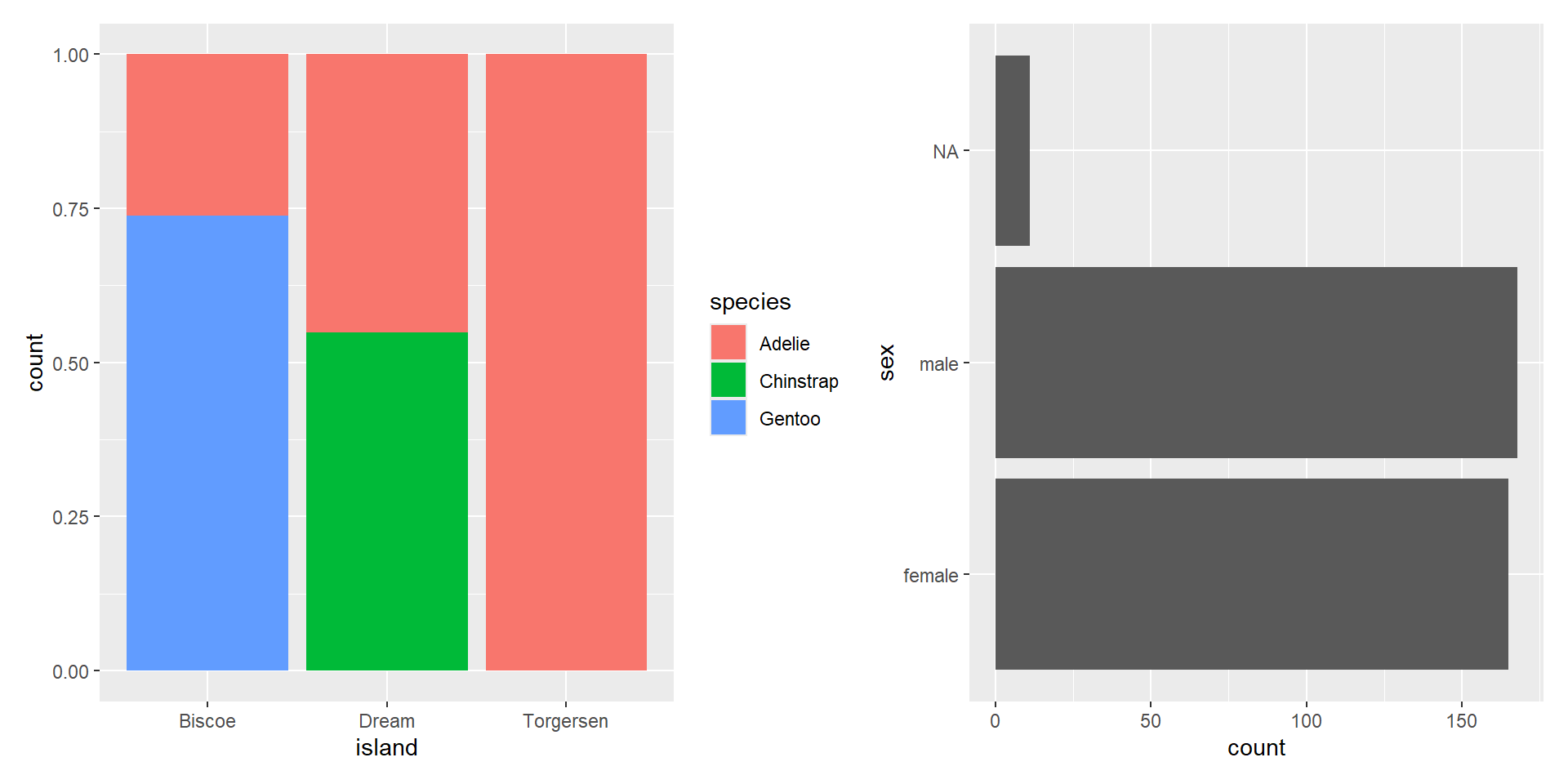
01:20

Question: What are the aesthetic mappings and geometries used here?
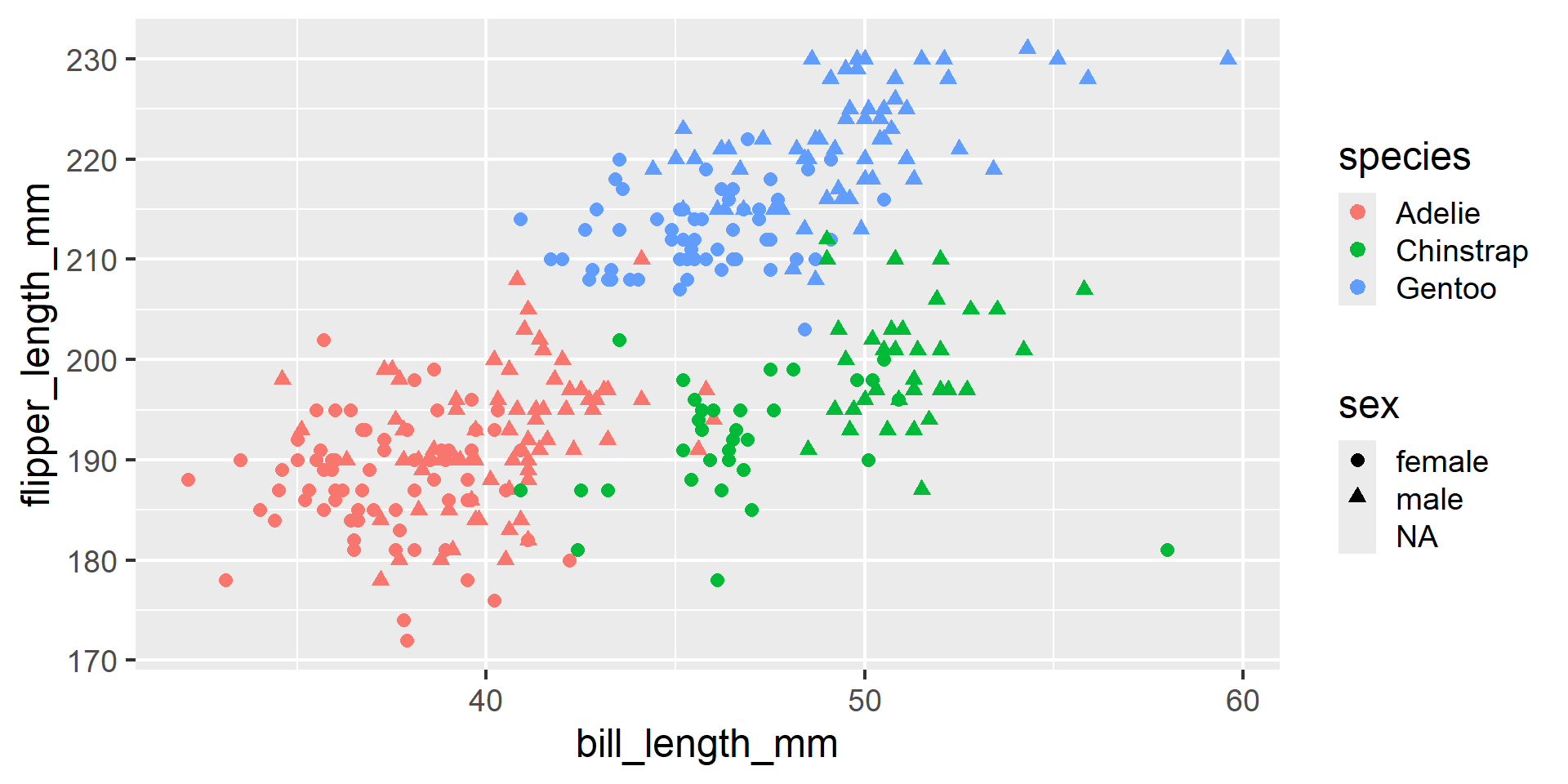
01:30

Wrap up

Summary

This is the process of how data is encoded to a visual through the framework that grammar of graphics offers.

Attendance Worksheet

Make sure to turn in your worksheet before leaving with your name on it please!!

Homework

Read The Persistent Grip of Social Class on College Admissions